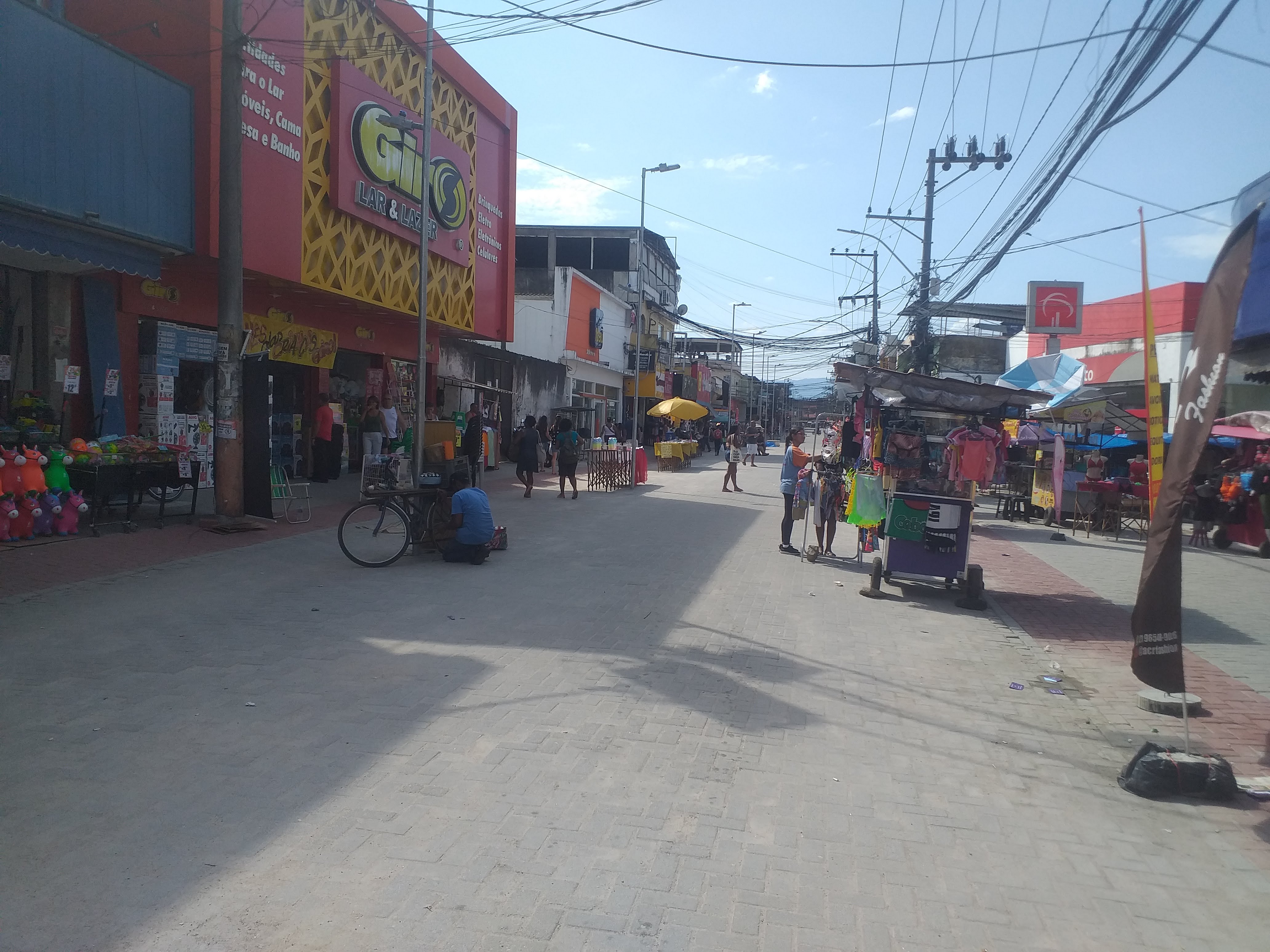
Belford Roxo sits in the Baixada Fluminense of Rio de Janeiro state, just 20 m above sea level and within the America/Sao_Paulo timezone. The climate is tropical, with warm temperatures year round and a distinct rainy season. Among the city's 518 thousand residents, the expat presence is small and concentrated in Belford Roxo Centro, the main neighborhood where newcomers tend to settle. There is no established expat community here, so those who arrive often build their own routines from scratch.
Housing costs are low by almost any standard. A 1-bedroom apartment in the city centre rents for $280/mo, while the same outside the centre drops to $220/mo. For more space, a 3-bedroom in the centre runs $550/mo, and outside the centre $430/mo. A single adult can expect a budget tier total of $750/mo with rent included, a mid-range tier total of $1,300/mo, or a comfortable tier total of $2,100/mo. Excluding rent, a single person spends about $480/mo, and a family of four about $1,450/mo. The cost of living index is 36/100 against New York City at 100, which places everyday expenses among the lowest in the region.
Safety requires attention. The safety index is 45/100 and the crime index is 55/100, so residents typically stay aware of their surroundings and choose where and when they move around. Healthcare quality is rated Fair, meaning routine care is available but complex or specialized treatment may require travel. Air quality is moderate, with an index of 65, lower than many large Brazilian metros. Internet averages 15 Mbps, adequate for browsing and messaging but not always for heavy remote work.
For longer stays, Brazil offers the VITEM XIV retirement visa, which requires a minimum monthly income of $2,000/mo, and the Brazil Digital Nomad Visa, which requires $1,500/mo. Getting to Belford Roxo is usually done by road from Rio de Janeiro, with bus and car connections linking the city to the wider metropolitan area. The overall expat score is 76/100 and the FIRE score is 78/100, making it a strong fit for retirees on a fixed income and for those pursuing financial independence. Digital nomads score it 47/100 and retirees 52/100, so remote workers and pensioners should weigh the limited English proficiency, modest internet speed, and quiet expat scene before committing.